Hair styling powder can give fine hair the one thing it struggles to keep: lift that lasts past your first coffee.
The trick sits in choosing the right powder (or powder-to-foam “volumiser”) for your scalp oil level, your sensitivity, and the kind of volume you want: airy and touchable, or gritty and anchored.
In this guide, we break down how powders work on fine hair, what to check on the label, and how to pick from a short list of strong options—without getting lost in marketing claims.
Why powders work so well on fine hair (and when they don’t)
Fine hair usually fails at volume for two reasons: it collapses under its own oils, and it lacks internal “scaffolding” at the roots.
Hair styling powders solve both problems at once. They add friction between strands (so hair grips and stacks), and they soak up some scalp oil (so the roots don’t go slick and flat). That friction piece matters more than most people realise. Fine hair can look full after blow-drying, then fall as soon as strands slide past each other again.
Most powders rely on dry, lightweight particles that sit at the root and upper lengths. Brands often use silica, starches, or similar absorbent powders. We can’t guarantee the exact ingredients for every product unless the product description states them, but the performance pattern stays consistent: more absorption and grit equals more visible lift, with a higher chance of a “powdery” feel.
When powders disappoint, the cause usually sits in mismatching the finish to your hair. A very matte, high-grip powder can make ultra-fine strands feel rough or look dull. A softer “volumiser” can look more natural, but it may fade sooner on an oily scalp. Fine hair also shows residue faster, especially on darker shades.
Canada-specific reality check: winter dryness plus indoor heating can make scalps swing between dehydrated and reactive. That can change how powders feel week to week. If your scalp gets tight or itchy in winter, look for a lighter application method, and plan for more frequent wash days rather than piling on product.
What to look for: hold level, finish, and reworkability
Fine hair needs structure, but it also needs movement. That balance starts with hold.
Hold level matters because powders can behave like invisible scaffolding at the roots. If you want crown lift that stays through commuting and office heat, you want a stronger, grippier powder. If you want soft volume that still feels like clean hair, go for a lighter volumiser and use less.
Finish usually sits on a spectrum from matte to natural. Matte powders can give the biggest “before and after” at the root, since they reduce shine that makes fine hair look flat. The trade-off: matte can read as dry on fine, light-reflective hair, especially under bright indoor lighting.
Reworkability sounds like styling fluff, but it’s practical. Fine hair often needs a midday reset. The best powders let you massage the roots and get lift back without adding more product. If a powder turns sticky when you touch it, you’ll feel trapped: great at 9 a.m., messy by noon.
How we’d map this to shopping behaviour: in our merchant feeds, styling powders often swing in and out of stock at Sephora Canada and salon retailers faster than basic sprays. If you find a powder that nails the finish for your hair, consider buying when it’s available, not when you run out.
A quick chooser (start here)
- Fine + oily roots: choose a more matte, higher-grip powder and apply only at the root.
- Fine + dry scalp: choose a lighter volumiser and use micro-doses, focusing on hair (not scalp).
- Fine + dark hair: prioritise low-residue feel; apply under top layers and brush lightly after.
- Fine + short hair: you can handle a bit more grit; it boosts piecey texture.
- Fine + long hair: root-only placement matters more; too much mid-length powder can tangle.
Ingredients and sensitivity: what fine scalps should watch for
Fine hair often comes with a sensitive scalp. Not always, but often enough that it should shape your pick.
Powders can irritate for three main reasons: the particles themselves (drying effect), fragrance, and build-up. Even without an “allergy,” a scalp can react to repeated drying or to leaving product sitting at the follicle for days. If you deal with itch, flakes, or tightness, treat powders like a strategic tool, not an everyday base layer.
Here’s the label-reading approach we use for this category, even when ingredient lists differ by brand and region. First, identify whether you react more to fragrance (headache, itch), or to dryness and grit (tight scalp, brittle feel). Then choose your application method around that sensitivity.
Practical guidance that holds up across formulas:
- If you’re fragrance-sensitive: patch-test any new powder on a small scalp area for one day before regular use.
- If you’re dryness-prone: apply to hair close to the root, not directly onto the scalp skin.
- If you get build-up fast: keep powder for “volume days,” not every wash cycle, and shampoo thoroughly.
- If you colour your hair: use a smaller amount and avoid heavy rubbing, which can fade toner faster.
And yes, Canadian winter changes the equation. Low humidity makes powder feel stronger, faster. If your hair gets staticky, you might prefer a softer volumiser texture, and you’ll want to use less product than you would in summer.
Picking the best option by hair type and volume goal (with product picks)
Fine hair isn’t one thing. It can be fine and dense, fine and sparse, fine and pin-straight, or fine with wave that collapses.
Below, we match common “fine hair problems” to the kind of powder behaviour that usually solves them. Every recommendation stays within Hair Styling Powders & Volumisers.
1) Fine, oily roots: choose maximum oil-control and grip
For oily roots, you want a powder that keeps lift by staying matte. Apply only at the root and under the part. Avoid dusting through lengths, which can make ends feel parched.
Pick: Sexy Hair Big Sexy Hair Powder Play Volumizing & Texturizing Powder (Hair Styling Powder & Volumiser).
2) Fine but not oily: choose lift without “crispy” texture
If your scalp doesn’t get greasy fast, you can prioritise a natural finish and reworkability. Look for powders marketed as volumisers rather than aggressive texture boosters, then use small amounts.
Pick: Schwarzkopf OSiS+ Dust It Mattifying Volume Powder (Hair Styling Powder & Volumiser).
3) Fine and sparse: choose targeted root placement and controlled dose
Sparse fine hair looks best with lift at the root and minimal visible residue. Less product, better placement, and a gentle massage pattern win here.
Pick: got2b Powder’ful Volumizing Styling Powder (Hair Styling Powder & Volumiser).
4) Fine, long hair that falls flat: choose root scaffolding, not mid-length grit
Long fine hair collapses because the lengths weigh down the root. You need root-only product and a “set” technique (we cover it below). A powder that grips at the base helps the most.
Pick: Kenra Professional Volume Powder 14 (Hair Styling Powder & Volumiser).
5) Fine, short hair: choose texture that makes styling easier
Short fine cuts can take more powder because you don’t fight tangling through long lengths. A grippy powder makes styling faster and keeps pieces separated.
Pick: American Crew Boost Powder (Hair Styling Powder & Volumiser).
How to compare powders without guessing: residue, control, and value
When two powders both promise “volume,” the real differences show up in how they dispense, how they sit on the scalp, and how quickly they turn heavy.
Residue risk depends on three things: how much you use, where you place it, and how finely milled the product is. Fine hair makes residue more visible because the strand diameter reflects light differently once coated. If you wear your hair sleek or tucked behind the ears, place powder under top layers, then lift the hair above it.
Control often comes down to the dispenser. Some bottles puff out a cloud. Others let you tap small amounts. For fine hair, “micro-dose” control matters more than maximum output. Too much powder turns volume into stiffness, and stiffness makes fine hair look thinner.
Value in this category rarely means “biggest bottle.” Powders last a long time if you apply properly. Our price tracker shows that shoppers often overpay when they impulse-buy at full price, then use far more product than needed. Better technique stretches any powder further.
A simple comparison framework
- Do you need oil control? If yes, go matte and root-only.
- Do you touch your hair a lot? If yes, prioritise reworkability and use less.
- Do you wear dark hair? If yes, avoid over-application at the part line.
- Do you need lift for photos or all-day? Photos can handle more grit; all-day needs comfort.
Where to shop in Canada: powders and volumisers appear most often at Sephora Canada for prestige lines, and at Shoppers Drug Mart or salon channels for mass and pro brands. Stock can vary by region, so it helps to check multiple retailers before you commit.
Fine-hair application methods that change the result
Most “powder doesn’t work for me” complaints come from applying too much, too close to the scalp, too early.
Fine hair responds best when you apply in layers and build slowly. That gives you lift without a chalky feel.
Technique 1: The micro-dose root lift (everyday volume)
- Start with dry hair. Fully dry. Damp roots turn powder into paste.
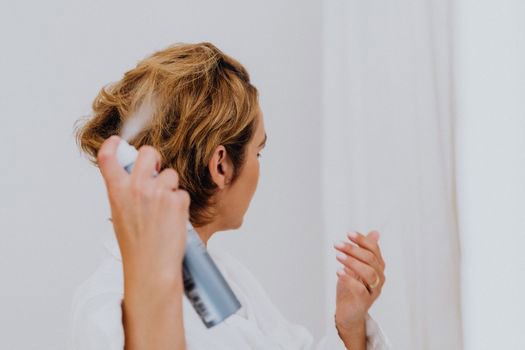
- Lift a top section at the crown and apply a tiny amount underneath.
- Wait 10 seconds, then massage with fingertips in small circles.
- Release the top section and lightly comb the surface with fingers.
Stop there. Fine hair looks best when you stop earlier than you think.
Technique 2: The “hidden grid” (for sparse areas)
Instead of applying along the part, apply in a grid pattern under the top layer. Think: three small points behind the hairline, then two points at the crown. Massage each point separately. This keeps the surface cleaner and reduces visible residue.
Technique 3: The long-hair anchor (for hair that collapses)
Apply powder at the crown and at the back of the head, not just near the front. Long fine hair collapses from the back down, so you need lift where the weight sits. After massaging, tilt your head forward and shake the roots lightly with fingertips.
If you want the powder to last longer, pair it with a blow-dry step before you apply. We’re not recommending other product types here, but heat plus a clean root gives powder a better base.
Common fine-hair mistakes (and quick fixes)
Powders look simple. Fine hair makes them less forgiving.
Mistake: applying directly onto the scalp skin. That can feel itchy, especially in dry months. Fix: aim for hair near the root, then work it in. If you see product sitting on skin, you used too much or applied too close.
Mistake: using powder like a dry shampoo replacement. Powders absorb oil, but they also add grit. Fine hair can feel coated fast. Fix: use powder for structure days, and wash when your scalp needs washing.
Mistake: dusting along the part line. That shows residue and makes hair look dull. Fix: apply under the part, then move the hair back over it. You want lift from underneath, not a matte stripe.
Mistake: over-massaging. Too much friction can turn lift into tangles, especially on long fine hair. Fix: massage briefly, then stop. If you need more volume, add a second micro-dose rather than rubbing harder.
Mistake: expecting one product to do every job. Some days you want airy lift, other days you want grip for an updo. Fix: keep two powders in mind—one softer, one grippier—so you don’t force one product into the wrong role.
Practical takeaways: a fine-hair buying checklist
If you only remember one thing, remember this: fine hair needs precision, not more product.
Use this checklist when you shop, whether you browse hair care at a retailer like Shoppers Drug Mart or compare listings across merchants. (GlamGeek’s price tracking shows that styling products like powders often vary more by retailer than by shade-based makeup categories.)
- Pick your goal: soft lift (lighter volumiser) or textured lift (grippier powder).
- Match oil level: oily roots usually like matte powders; drier scalps do better with minimal direct scalp contact.
- Plan placement: crown and back-of-head placement beats part-line dusting.
- Choose a “reset” option: if you need midday volume, pick a powder you can rework by massaging.
- Budget for technique, not quantity: a small bottle can last if you micro-dose.
- Don’t ignore seasonality: winter dryness often means you use less and wash more regularly.
If you want a straightforward starting point, these are the five powders and volumisers we’d shortlist for fine hair shoppers: Sexy Hair Big Sexy Hair Powder Play, Schwarzkopf OSiS+ Dust It, got2b Powder’ful, Kenra Professional Volume Powder 14, and American Crew Boost Powder.
Looking for more hair care browsing? You can explore hair care categories for context, but keep your styling goals narrow when you buy. Fine hair rewards focus.
What kind of fine hair are you working with—oily roots, dry scalp, or hair that just collapses under length—and what finish do you want: airy or gritty?