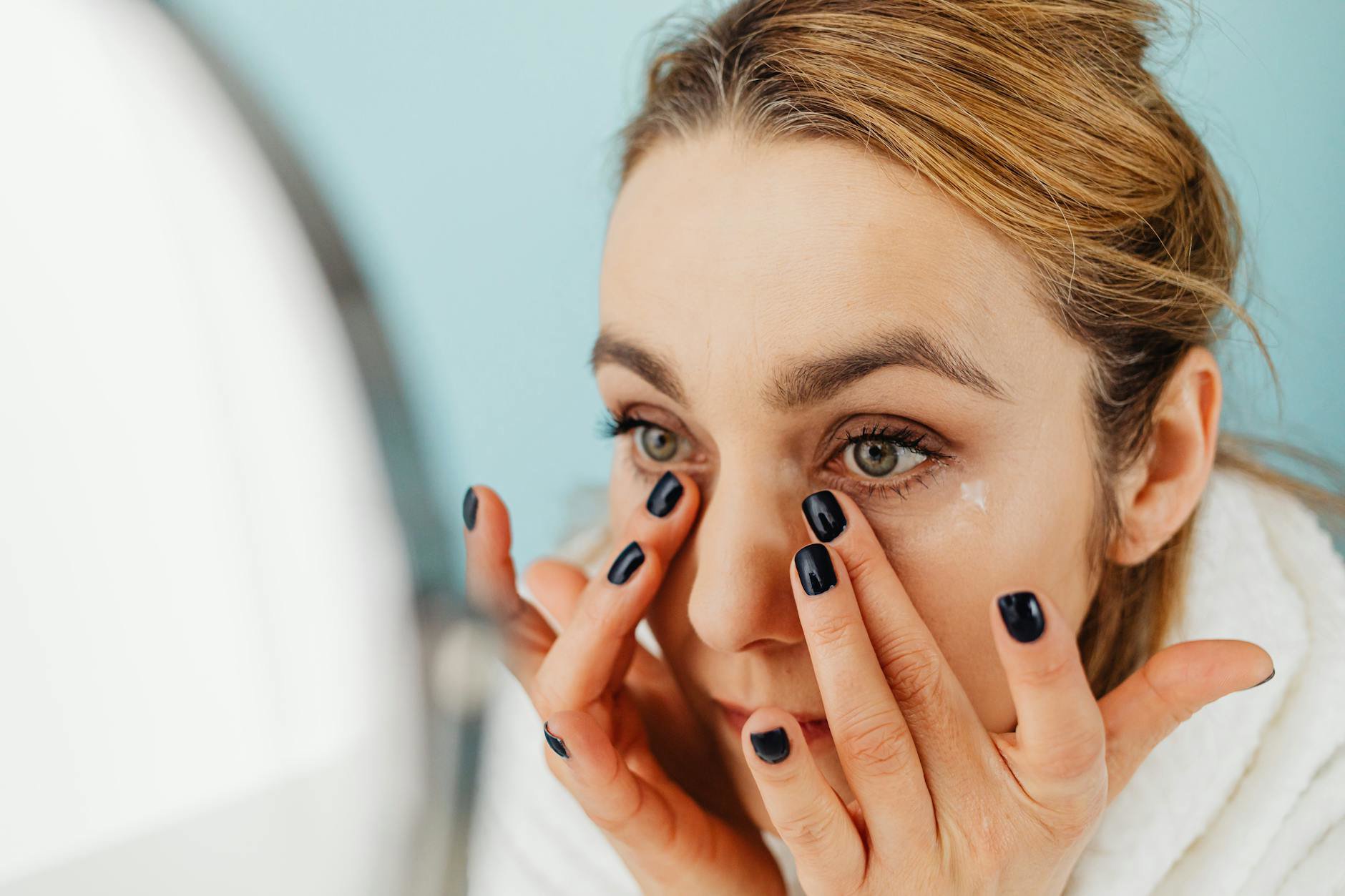
Apply eye cream correctly and you get what you paid for: hydration that lasts, smoother makeup wear, and less irritation from overdoing it.
The basics sound simple—use a tiny amount, pat gently, avoid the lash line—but most application mistakes happen in the details: where you place it, how far it travels, and what you layer on top.
This guide covers exactly that: AM and PM methods, placement maps, tapping technique, layering with other steps, and the common errors we see again and again in reviews and returns data.
GlamGeek’s price tracking also shows something else: eye creams swing wildly in price across UK retailers, from under £4 to well over £70. Technique matters even more when you want a £10 tube to perform like a £30 one.
The basics: what eye cream can (and can’t) do
The skin around the eyes feels different because it is different. It tends to sit thinner, move more (blinking, smiling, squinting), and react faster to friction and strong formulas.
Eye creams mainly do three jobs: hydrate, support the skin barrier, and improve how the area looks under makeup. Some also target visible texture like fine lines, or help with the look of fatigue. None can erase genetic under-eye structure, or fix sleep deprivation in a jar.
One more truth: most “results” live and die on irritation control. If an eye product stings, causes watering, or triggers bumps, you’ll stop using it—or you’ll keep rubbing your eyes. Either way, you lose.
That’s why gentle options earn their keep. La Roche-Posay Dermallergo Soothing Eye Cream (from £16.80) sits in that camp: a lightweight soothing fluid that’s clinically proven to hydrate and alleviate discomfort, with up to 48h hydration and Allergy UK approval.
For a budget routine, CeraVe Eye Repair Cream (from £10.85) often lands in the “minimalist but consistent” category in our merchant feed. We keep expectations realistic: you’re paying for steady hydration and comfort, not miracles.
How much to use: the “grain of rice” rule (and when to break it)
Most people use too much eye cream. Then it migrates, sits in creases, and makes mascara smudge.
Start with a grain of rice per eye. Not per application. Per eye. If you can see a glossy layer after patting, you used too much.
When should you break the rule? Only when the product doubles as a tint/brightener and you need coverage. Fenty Beauty Bright Fix Eye Brightener (from £14.67) sits in that hybrid zone: it hydrates, brightens, and blurs with sheer-to-buildable coverage. Here, you can apply a touch more, but do it in thin layers. You can always add. You can’t easily take away without rubbing.
Similarly, Milk Makeup Sunshine Under Eye Tint And Brighten (from £11.00) offers lightweight coverage while nourishing and helping reduce puffiness. Treat it like complexion product: one light pass, then spot-build only where needed.
If you want a simple hydration-first cream, stick to the rice-grain habit. Avène Eau Thermale Avne Soothing Eye Contour Cream (from £12.75) and Avène Eau Thermale Avne Soothing Eye Contour Cream (from £10.20) both position themselves around soothing and decongesting sensitive eyelids, plus hydration and tightness relief. These kinds of formulas do best with restraint.
Quick dosing checklist
- Dry, heated-home winter skin: rice-grain per eye, then wait and assess before adding more.
- Under-makeup days: slightly less than rice-grain; you want slip, not shine.
- Tinted eye products: thin layers; build coverage only where darkness shows.
- If it pills: you used too much or layered too fast.
Placement: where eye cream should go (and where it shouldn’t)
Eye cream travels. Body heat and blinking pull it around, so placement matters more than pressure.
Use the “orbital bone map.” That’s the bony rim you can feel around your eye socket. Place product on that rim, not right up against the lashes.
For under-eye: dot from the inner corner (but not into the tear duct) across the orbital bone, then along the outer corner. For upper eye: only apply on the brow bone area unless the product specifically says it suits lids.
Why avoid the lash line? Because migration can trigger stinging and watering. Once your eyes water, you rub. Once you rub, you inflame. It turns into a loop.
If you wear contact lenses or you react easily, we’d prioritise low-drama formulas and conservative placement. La Roche-Posay Dermallergo Soothing Eye Cream (from £16.80) exists for that “sensitivity first” brief, with a barrier-focused positioning and long hydration claim.
For “tight eyelids” days, the Avène eye contour cream description calls out sensitive eyelids and a soothing feeling of lightness, plus reduced tightness. That’s a useful clue: you can apply a small amount up to the orbital area near the lid, but still avoid the lash roots.
Technique: tapping, smoothing, and how long you should spend
You don’t need a ten-minute ritual. You do need consistency and a light hand.
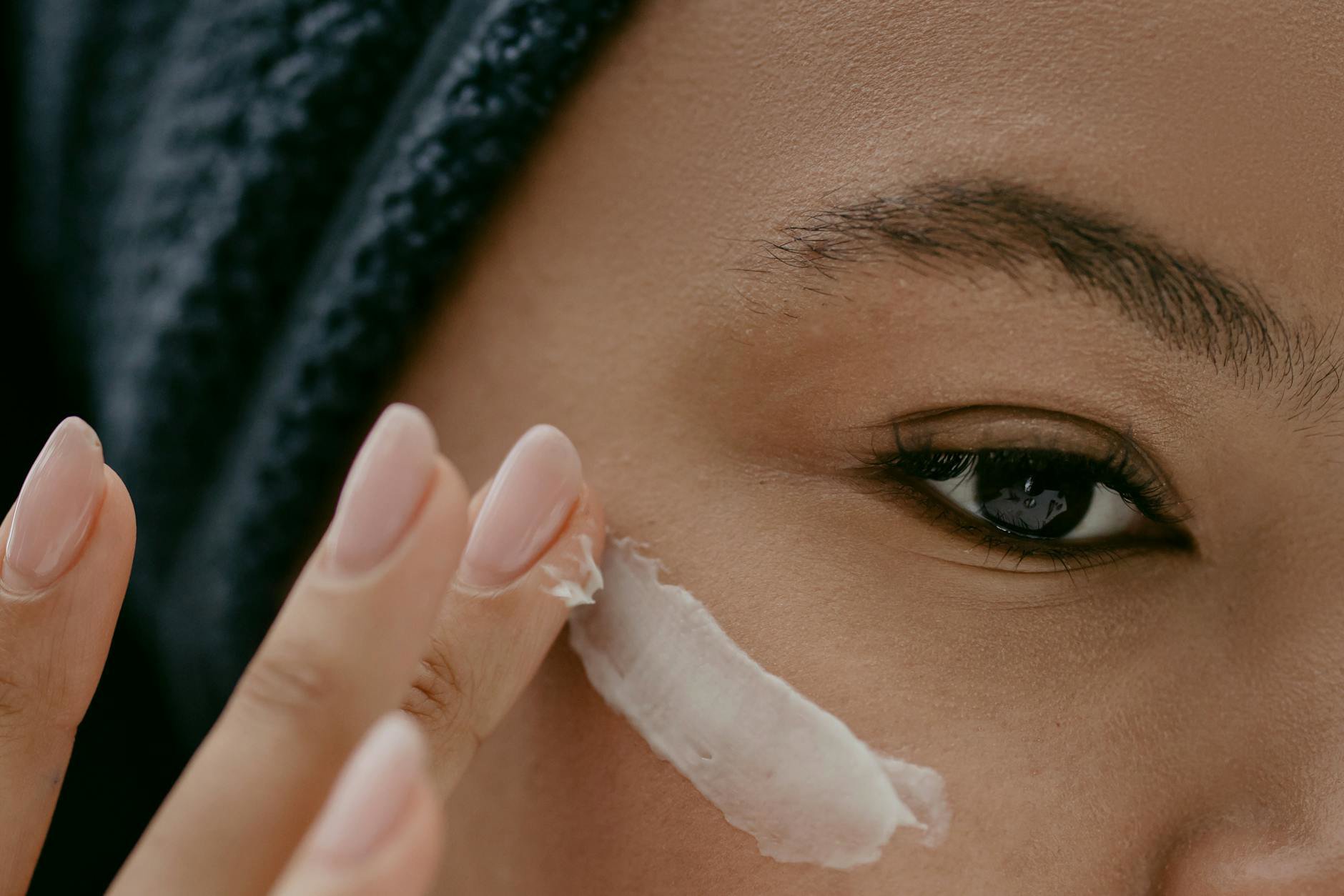
We rate the “dot, warm, press” method because it reduces tugging:
- Dot: place 3–5 tiny dots along the orbital bone.
- Warm: touch ring fingers together to spread the dots into a thin film.
- Press: press and tap lightly until it stops feeling wet.
- Finish: one gentle sweep outward to even it out (no back-and-forth rubbing).
Ring fingers help because they naturally apply less force. But the real trick sits in timing: stop once the product feels absorbed. Overworking it causes pilling, redness, and that “why do my eyes look worse?” moment.
If you use a brightening/tinted eye product, switch to a makeup-style pat. Fenty Beauty Bright Fix Eye Brightener describes a “tap” application and a lightweight feel. That matches how these formulas tend to behave: tapping keeps coverage even and reduces creasing.
For products positioned as long-wear hydration, spend a little longer pressing. Fresh Lotus Youth Preserve Eye Cream (from £30.75) claims up to 24 hours of moisture and a featherweight feel. A thin, well-pressed layer supports that “plumped, smooth” finish better than a thick smear.
AM routine: eye cream under SPF and makeup (no pilling, no creasing)
Morning application has one job: set up the under-eye so makeup sits better and the area stays comfortable through the day.
Keep textures light. Keep layers thin. Give them time.
Here’s a practical AM sequence that works for most routines, even when you also use SPF Protection Products and a base:
- Clean skin: apply eye cream on dry-to-slightly-damp skin.
- Wait: 60–90 seconds. Enough for the slip to reduce.
- SPF: apply carefully around the orbital area without dragging.
- Makeup: use thin layers; press concealer in rather than wiping.
If you want an eye product that behaves like a “no-makeup makeup” corrector, choose one built for it. Fenty Beauty Bright Fix Eye Brightener offers sheer-to-buildable coverage and a blurred look. That means you can often use less concealer on top.
For a more budget-friendly brightener step, Catrice Cosmetics Under Eye Brightener (from £3.49) positions itself as a concealer cream that helps cancel out and reduce the look of dark circles. Treat it like makeup: tap it on, then leave it alone for a minute before setting with whatever base you use.
Pilling usually comes from one of three issues: too much product, layering too quickly, or mixing incompatible textures. The fix almost always involves using less eye cream and waiting longer before you apply makeup.
If your under-eye creases by lunchtime, don’t add more product. Blot with a tissue and re-tap the edges. More layers make it worse.

PM routine: when to prioritise treatment (retinol, peptides, rich textures)
Night application has a different goal: support the skin barrier and target visible texture over time.
PM also gives you more freedom with texture. You don’t need to worry about concealer sitting on top. You do need to worry about irritation, because you’ll keep your eyes closed for hours.
If you want a targeted active, THE INKEY LIST Retinol Eye Cream (from £12.95) clearly signals its focus: retinol-powered radiance, firming, and smoothing. Retinol can help the look of fine lines, but it punishes sloppy application.
Use a smaller amount than you think. Apply on the orbital bone only. Avoid corners where product can pool. Start 2–3 nights a week, then increase if your skin stays calm.
For a more “all-in-one comfort” feel, IT Cosmetics Confidence In An Eye Cream (from £25.50) positions itself as targeting four signs of eye fatigue, including dryness and lack of firmness, with a peptide focus. Peptide positioning usually pairs well with nightly use because it tends to sit on the gentler end.
At the luxury end, Sulwhasoo Concentrated Ginseng Rejuvenating Eye Cream (from £74.63) carries the “rejuvenating” brief and comes as a set. Our pricing data suggests shoppers often wait for promotions at premium retailers, but the application rules stay the same: thin layer, orbital bone, no rubbing.
PM tip that saves a lot of irritation: keep eye actives away from the lash line by at least a few millimetres. Migration does the rest while you sleep.
Choosing the right texture for your routine (and your budget)
Eye creams fail for two reasons: they irritate, or they don’t fit the routine.
If you want simple hydration that plays nicely with other steps, look for formulas that describe hydration and comfort without big claims. La Roche-Posay Dermallergo Soothing Eye Cream (from £16.80) leans into soothing and barrier support with long hydration. Avène Eau Thermale Avne Soothing Eye Contour Cream (from £12.75) focuses on decongesting and soothing sensitive eyelids, plus tightness relief.
If you want a plush, cushiony feel, Kiehls Kiehl'S Creamy Eye Treatment With Avocado (from £22.50) sits in the “comfort food” category based on its avocado-led positioning. We’d use this style at night or on no-makeup days, because richer textures can interfere with concealer grip.
If your priority sits with “plump and dewy,” Fresh Lotus Youth Preserve Eye Cream (from £30.75) claims up to 24 hours of moisture and a plumped, smooth finish. That makes it a strong AM candidate for people who skip heavy base makeup.
Want a true bargain? In our feeds, Catrice Cosmetics Under Eye Brightener (from £3.49) often sits at the “try it without commitment” price point. Just remember it behaves like a concealer cream, not a treatment cream.
One oddity worth flagging: some listings sometimes carry mismatched descriptions in retailer catalogues. For example, Mario Badescu Hyaluronic Eye Cream (from £15.67) appears in our eye cream category, but the supplied description reads like a blemish-prone moisturiser. We’d treat that as a data quality issue and avoid making ingredient claims beyond the name and category.
Common application mistakes (and the quick fixes)
Most eye cream problems come from technique, not the product.
Here are the mistakes that show up most in “doesn’t work” complaints, plus what to do instead.
- Smearing it right up to the lashes: place it on the orbital bone and let it migrate.
- Using too much: rice-grain per eye, then stop when it absorbs.
- Rubbing back and forth: dot and press; one outward sweep only.
- Applying on soaking-wet skin: pat skin to damp, not dripping.
- Layering too fast under makeup: wait 60–90 seconds before base.
- Trying to “fix” creasing by adding more: blot and re-tap instead.
- Starting retinol nightly from day one: start 2–3 nights weekly and build up.
If you want to use a retinol eye cream but you tend to react, consider alternating nights with a soothing formula. That can mean retinol nights with THE INKEY LIST Retinol Eye Cream and recovery nights with La Roche-Posay Dermallergo Soothing Eye Cream.
One more mistake: expecting a single product to cover everything. Some days call for a tinted brightener like Fenty or Milk. Other days need basic comfort. Switching based on your day helps more than stacking five layers.

Practical tips you can use today (AM & PM mini playbooks)
If you only change one thing, change the amount. Most people cut their eye cream usage in half and immediately see less creasing and less migration.
Then get strict about timing. Give your eye product a minute before SPF and base. That single pause prevents most pilling issues.
AM mini playbook (2 minutes)
- Rice-grain per eye, dotted on the orbital bone.
- Press for 20 seconds total.
- Wait 60–90 seconds.
- If you want coverage, tap on Fenty Beauty Bright Fix Eye Brightener (from £14.67) or Milk Makeup Sunshine Under Eye Tint And Brighten (from £11.00) in thin layers.
PM mini playbook (1 minute)
- Choose one focus: comfort (Avène, from £12.75) or active (THE INKEY LIST Retinol Eye Cream, from £12.95).
- Apply smaller than rice-grain if you use retinol.
- Keep it away from lash roots and inner corners.
- If you feel stingy warmth, rinse and stop. Don’t “push through.”
Finally, shop smart. Our tracker often shows the same eye cream priced differently across Boots, Superdrug, Space NK, John Lewis, Cult Beauty, and Lookfantastic depending on promotions and bundles. If you already know what suits your skin, price-checking can free budget for the products you’ll actually repurchase.
Want us to build a simple AM/PM plan around one eye cream from this list—hydrating, tinted, or retinol-focused?
Tell us what your main issue is (dryness, puffiness, makeup creasing, sensitivity) and which step causes trouble.
For browsing around, you can also explore skin care and makeup on GlamGeek, plus brand hubs like L'Oréal, Clinique, and Shiseido.