
Yes, body oil can cause breakouts for some people—but it depends less on the idea of “oil” and more on what’s in the oil, how much you use, and where you apply it.
Body acne usually flares when pores get blocked by a mix of oil, sweat, dead skin, and friction. A rich oil applied heavily to the chest, back, or shoulders (aka the classic body-acne zones) can add fuel to that mix.
Still, plenty of people use body oil without a single clogged pore. The goal is to pick a formula and routine that match acne-prone skin—especially in Canada, where winter dryness can push people to over-apply heavier products.
This guide breaks down what actually triggers body breakouts, which ingredients tend to be riskier, and how to use body oil more safely when you’re prone to bumps.
What “breakouts” from body oil really are (and where they show up)
When readers ask if body oil causes breakouts, they usually mean one of three things: comedonal acne (clogged pores and tiny bumps), inflamed acne (red pimples), or folliculitis (inflamed hair follicles that can look like acne).
Body oils can contribute to the first two if they create a film that traps sweat and dead skin inside pores. That risk climbs on the upper back, shoulders, chest, and butt—areas with more friction from sports bras, backpacks, winter layers, and tight waistbands.
Folliculitis plays by slightly different rules. It often flares with heat, sweat, occlusion, and sometimes yeast overgrowth. Heavy, fragranced oils plus gym clothes can make that combination worse, even if the oil itself doesn’t “clog pores” in the classic sense.
One quick reality check: if breakouts show up mainly where fabric rubs, the trigger may be friction + sweat + product, not just the oil alone.
Our merchant-feed data also shows a pattern: when temperatures drop, body oil purchases spike alongside richer body moisturisers like Body Creams and Body Lotions. More layers, more dryness, more product—more opportunity for congestion.
Comedogenicity: useful concept, imperfect tool
“Comedogenic” means likely to clog pores, but comedogenic ratings come from older lab models and don’t predict every person’s skin. They still help when you use them as a risk signal, not a verdict.
For acne-prone bodies, watch for two common trouble spots:
- Highly occlusive blends that sit on top of skin for hours—especially when layered under clothing.
- Fragrance-heavy formulas that irritate the skin barrier. Irritation can trigger more oil production and more inflammation.
Also, body skin differs from facial skin. The back and chest have larger pores and more sweat. They often tolerate less “coating” than dry legs or arms.
Here’s the practical way we think about it: if you break out easily, you don’t need to avoid all body oils. You need to avoid too much oil in the wrong place in the wrong conditions.
And yes, “wrong conditions” can be as simple as applying oil right before putting on a tight synthetic shirt.
Ingredient watchlist: what tends to trigger clogs or irritation
We can’t responsibly label every oil as “safe” or “unsafe” without the full ingredient list for each product. But we can map the patterns that most often show up in acne complaints.
Heavier emollient oils (and buttery textures) can increase congestion risk on acne-prone zones. That doesn’t make them bad products; it makes them better for very dry legs than for back acne.
Then there’s fragrance. A fragranced body oil can feel luxurious, but irritation is a breakout multiplier. If you also wear Eau de Parfum Perfumes or Eau de Toilette Perfumes, stacking scent on scent can push sensitive skin over the edge.
Finally, consider essential oils. Some people do fine with them. Others get redness, itching, or a rash that looks like acne. If your “breakouts” feel itchy or appear as uniform little bumps, you may be dealing with irritation or folliculitis rather than classic acne.
What to look for instead?
- Simple formulas with fewer potential irritants.
- Lighter-feel oils that absorb faster, especially for the back and chest.
- Clear usage directions that encourage small amounts (a good sign the brand expects you to apply thinly).
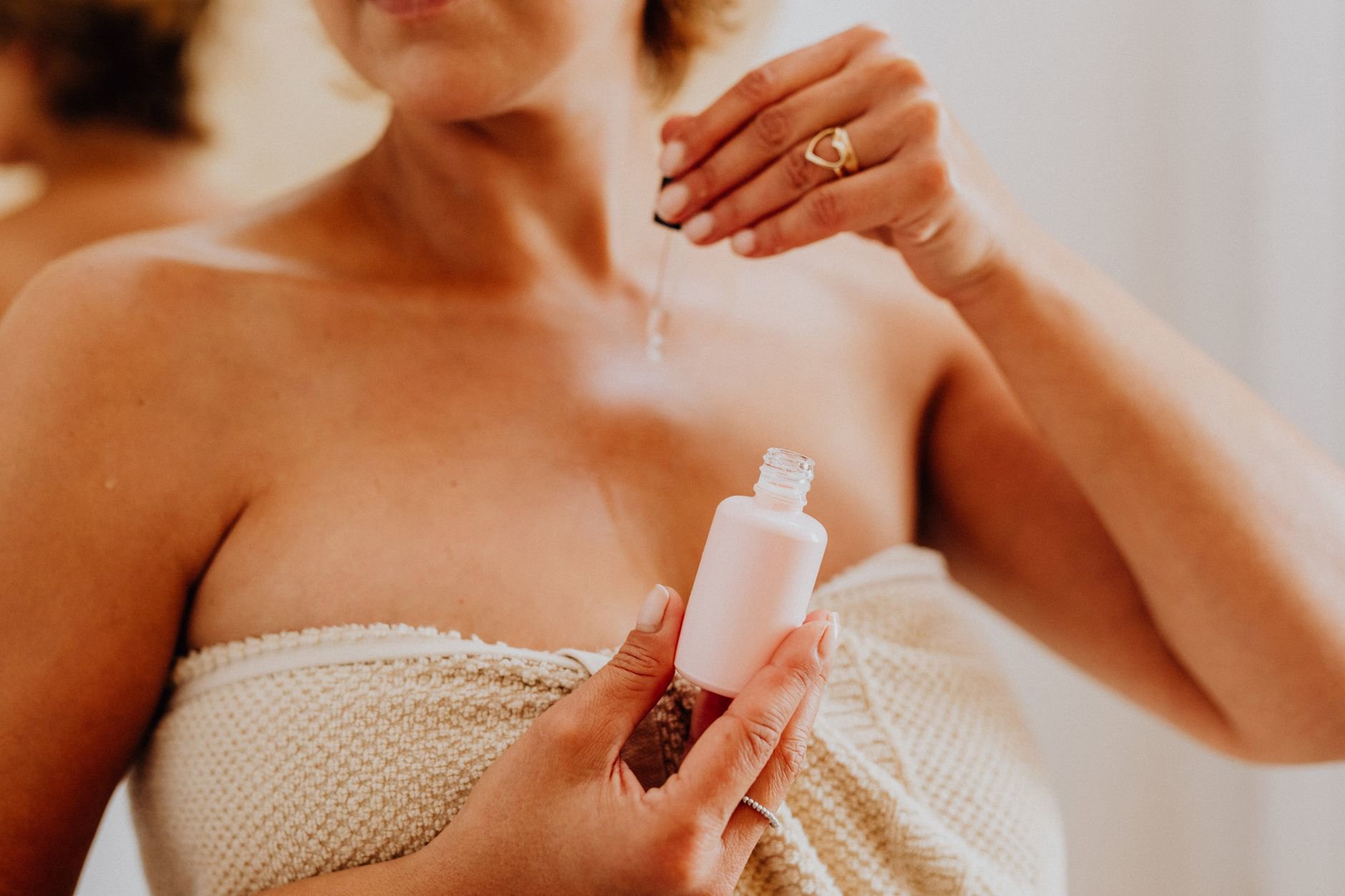
If you want a scent, keep it strategic: use fragranced oil on lower legs and arms, and keep acne-prone zones scent-free.
Body-oil technique for acne-prone skin (this matters more than people think)
Most “body oil caused my acne” stories share the same routine: oil goes on thick, then clothing goes on immediately, then sweat happens.
We’d fix the method before we blame the category.
Step-by-step: lower-breakout way to use body oil
- Apply on damp skin after showering, not dripping wet. Damp skin helps spread a thinner layer.
- Use less than you think: start with a few drops per limb. Add only if skin still feels tight.
- Keep it off acne zones at first. Patch-test on legs and arms for a week.
- Wait before dressing: give it 5–10 minutes to settle before tight clothing.
- Separate “dryness zones” and “breakout zones”. Oil for shins; something lighter (or nothing) for the upper back.
One sentence that saves a lot of grief: body oil doesn’t need to go everywhere.
In Canadian winters, indoor heat can make skin feel painfully tight. That’s when people over-apply. If you need more comfort, apply a second thin layer later rather than one heavy layer once.
If you work out, time it. Oil + sweat + compression gear often equals bumps. Use body oil after your post-gym shower, not before the gym.
Product picks from our tracker: when we’d use which body oil
Because this guide focuses on breakouts, we prioritise a simple buying framework: pick your body oil based on where you’ll use it and how acne-prone that area is.
For fragrance-lovers (best kept to arms/legs): Guerlain often attracts shoppers who want the “treat” factor in body care. In our catalogue, Guerlain Huile de Beauté Satinée – Body Oil sits at C$97.00. It’s a splurge, so we’d reserve it for areas that don’t break out easily.
For a classic body-oil profile at a mid-range price: Clarins remains one of the most searched body-oil brands in Canadian retailer feeds. Clarins Body Treatment Oil “Tonic” lists at C$88.00. If you’re acne-prone, keep application to legs/hips first, then expand only if skin stays calm.
For budget-led routines: The Body Shop tends to price body care more accessibly than prestige brands. The Body Shop Spa of the World Polynesian Monoi Radiance Oil shows at C$22.00 in our product data. That makes it easier to use as a “targeted” oil (shins, elbows) without feeling like you must slather it everywhere to justify the spend.
For shoppers who want a simple, giftable pick: Sephora Collection body oils often show up in seasonal merchandising at Sephora Canada. Sephora Collection Body Oil lists at C$20.00 in our index. If you’re breakout-prone, start with the thinnest layer possible and avoid the upper back at first.
Where to buy in Canada? These brands commonly appear across Sephora Canada and department store channels, while value options often show up at Shoppers Drug Mart or The Bay depending on brand and distribution. Our price tracking helps spot when a body oil quietly dips during promo cycles, but the “best” oil still needs to match your breakout pattern.
How to troubleshoot: is it the oil, your routine, or your environment?
If you start a body oil and break out, don’t panic-buy a new product immediately. Run a simple elimination test for two weeks.
First: change placement. Keep the oil on lower legs and forearms only. If breakouts continue on the back and chest, the oil likely isn’t the sole trigger.
Second: change timing. Apply only at night, and wear loose sleepwear. If bumps improve, occlusion from daytime clothing played a big role.
Third: change the amount. Most people use 2–4x more oil than they need. A thin layer reduces the chance that dead skin and sweat get trapped.
Fourth: check friction and laundry. Fabric softeners, heavy detergents, and tight synthetics can aggravate body acne. Oil plus irritation equals more inflammation.
Also consider what kind of “breakout” you see:
- Clogged pores: tiny skin-coloured bumps, often on chest/shoulders.
- Inflamed acne: red tender pimples, often after heavy occlusion.
- Folliculitis: uniform bumps, sometimes itchy, often after sweating.
- Contact irritation: redness, stinging, patchy rash after application.
If you suspect folliculitis or a rash, stop the oil and consider a clinician’s advice. Body acne has lookalikes, and the fix changes depending on the cause.
Safer body-oil routines for acne-prone Canadians (season by season)
Canadian weather creates two distinct body-oil seasons: long dry winters and short humid summers. Acne-prone skin often needs different tactics in each.
Winter: skin barrier stress goes up because indoor heating lowers humidity. People apply richer layers more often. That’s when body oils shine for comfort, but also when they clog more easily under heavy sweaters.
Our evergreen advice: use body oil as a targeted seal, not a head-to-toe coating. Apply it to the driest zones (shins, elbows), and rely on lighter hydration elsewhere. If you already use other skin care categories like skin care actives on the body, keep them separate from oil-heavy layering until you know your skin’s tolerance.
Summer: sweat and sunscreen increase the “film” on skin. Adding body oil on top can push acne-prone areas into congestion. Save the oil for evenings, or limit it to legs. Keep shoulders and chest as product-light as possible.
One more practical point: if you use fragranced body oil and you also wear fragrance, don’t stack them on the same area. Put body oil on legs, fragrance on wrists or clothing. Less irritation. Less confusion when you troubleshoot.
Practical tips you can use today (without buying anything new)
Start with technique. It fixes more “body oil breakouts” than switching products does.
- Use oil only on damp skin so you need less.
- Keep oil off your upper back for two weeks, then reintroduce slowly if you want.
- Don’t apply right before the gym or before a long commute in layers.
- Choose zones: oil for shins and elbows; skip chest/shoulders if they clog.
- Wait before dressing so clothing doesn’t trap a wet layer.
- Change one variable at a time so you can identify the trigger.
If you do want to buy a body oil, pick based on how you’ll use it. A luxe option like Guerlain Huile de Beauté Satinée – Body Oil (C$97.00) can make sense as a lower-leg treat, while value picks like Sephora Collection Body Oil (C$20.00) or The Body Shop Spa of the World Polynesian Monoi Radiance Oil (C$22.00) can work well for targeted dryness without encouraging over-application.
And if you want a classic treatment-style body oil profile, Clarins Body Treatment Oil “Tonic” (C$88.00) sits in that established middle ground—just keep it away from your most acne-prone zones until you know how your skin reacts.
Bottom line: can body oil cause breakouts?
It can. Not always.
Body oil tends to trigger breakouts when you apply too much, apply it to acne-prone zones, or trap it under sweat and friction. If you treat body oil as a targeted step—thin layer, damp skin, smart placement—you can often keep the benefits without the bumps.
Which body area breaks out for you most: upper back, chest, shoulders, or somewhere else? That detail changes the “best” way to use body oil.