Pencil, liquid, and gel eyeliners can all create definition, but they don’t behave the same on real eyelids. If you want the easiest learning curve and the most forgiving blend, choose a pencil liner. If you want the sharpest wing with the least smudge, liquid tends to win. If you want intense pigment with a softer edge than liquid, gel sits in the middle.
That said, there’s a reason pencil liners still dominate most makeup bags: they work for tightlining, smoky eyes, quick daytime definition, and “fixing” mistakes without starting over.
This guide compares all three formats so you can pick based on finish, ease, and longevity—then we bring it back to what you can actually buy in Canada right now in pencil form, with price-checked picks from our tracked merchant feeds.
The three formats, in plain language
Think of eyeliner format as a delivery system for pigments, waxes, and film-formers. The formula determines how fast it sets, how much it drags on the lid, and whether it blends or locks down.
Pencil eyeliner usually relies on waxes and emollients so it can glide. That glide matters in winter. Canadian indoor heating plus low humidity can make lids feel tighter, which can make stiffer formulas skip. Many pencils also give you a working time: a short window where you can smudge before the formula sets.
Liquid eyeliner typically uses water or solvents plus film-formers that dry into a thin layer. That’s why liquid often gives the crispiest line. It’s also why it can feel less forgiving: once it sets, it behaves more like a flexible “paint” than a blendable pigment.
Gel eyeliner lives between them. Classic gel pots use waxes plus volatile ingredients to dry down, often applied with a brush. Gel pencils exist too, but most people mean “pot gel.” You usually get stronger pigment than many pencils, with more slip than liquid.
Here’s the key point: if your priority is control and correction, pencil wins. If your priority is precision, liquid often wins. If your priority is pigment with some blend, gel usually wins.
Finish and texture: what you’ll actually see on the eye
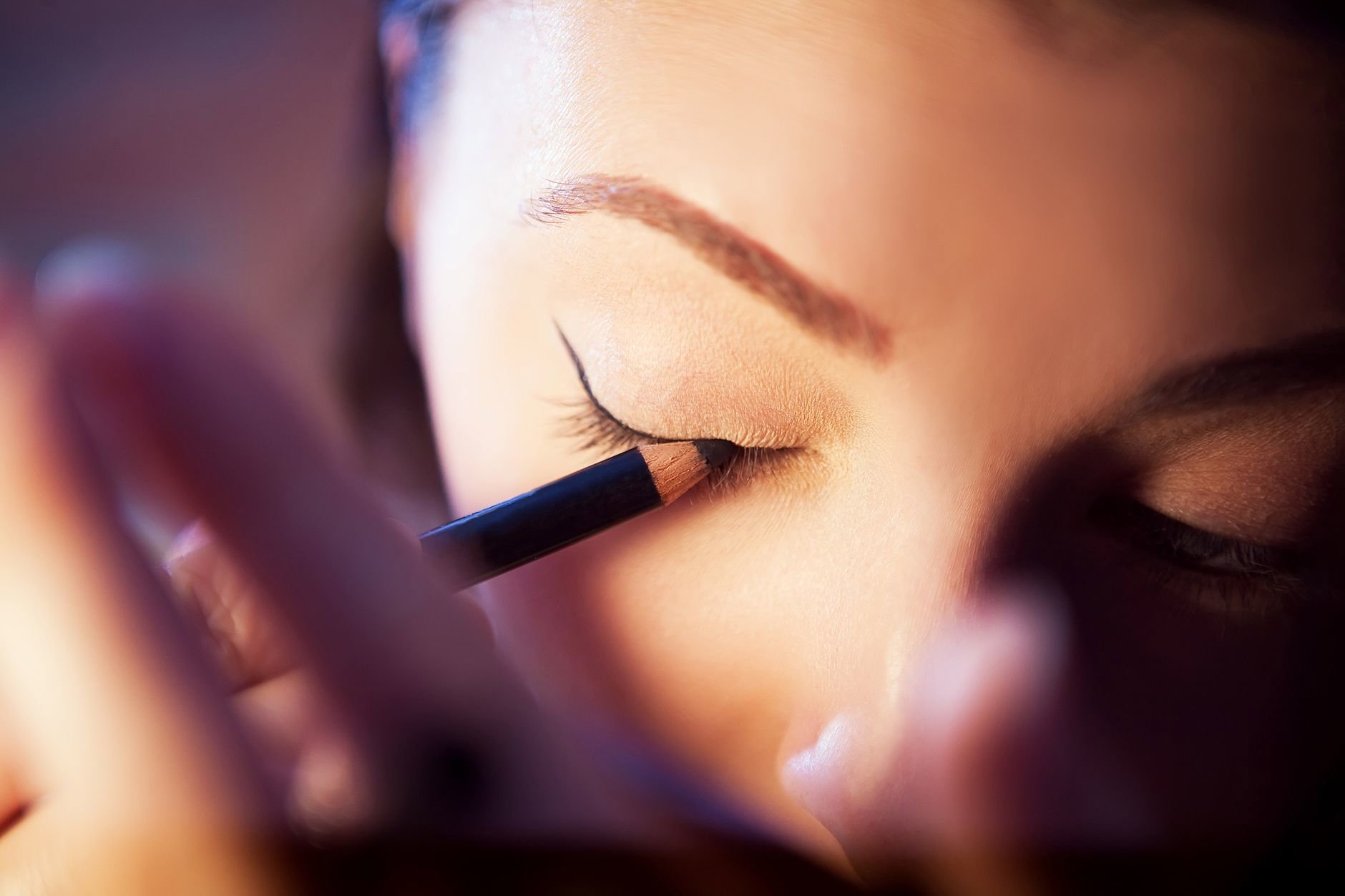
Finish sounds like marketing. It’s also practical. Matte liners tend to look sharper from a distance, while satin or creamy finishes can read softer and more “lived-in.”
Pencils come in the widest range of finishes because brands can tweak the wax-to-pigment ratio and add different emollients. If you want a soft-focus, slightly smoked lash line that doesn’t look “drawn on,” pencils do it with less effort.
Liquid liners usually look the most uniform. You get an even, opaque stroke that can look glossy at first, then dry down. If you hate seeing texture along the lash line, liquid can look cleaner—until it cracks on oily lids or transfers on hooded eyes.
Gel liners can look very saturated. Many wear like a flexible stain once they set, and they can look smoother than pencil when you pack pigment close to the lashes. They can also look heavier if you apply too much product at once.
Within pencils, shoppers often ask us which ones “look expensive.” Our price tracker can’t judge taste, but it does show a consistent pattern: prestige pencils hold their pricing longer, while mid-range pencils discount more often at Canadian retailers. If you buy multiples (black, brown, a shimmer), catching a sale matters.
Pencil liner picks to match finish goals (Canada pricing)
- Sephora Collection 12H Contour Pencil Eyeliner (C$18.00): a budget-friendly place to start if you want a classic pencil format without prestige pricing. Shop it alongside other Sephora Collection staples.
- MAC Colour Excess Gel Pencil Eye Liner (C$34.00): a higher-priced pencil option when you want more intensity without jumping to liquid. You’ll find it under MAC in our index.
- Charlotte Tilbury Pillow Talk Eyeliner (C$34.00): if you like a softer, “defined but not harsh” look, a shade-driven pencil like this often fits the brief. Browse the brand hub at Charlotte Tilbury.
- Clinique Quickliner For Eyes (C$32.00): a widely stocked pencil that tends to appeal to sensitive-eye shoppers. See more at Clinique.
Ease of application: which format forgives mistakes
If you only wear liner a few times a week, ease beats hype. Most people don’t need a perfect wing at 7:40 a.m. They need symmetry and a lash line that looks fuller.
Pencil liners forgive because you can build in short strokes. You can stop, step back, then add more. You can also smudge edges to hide unevenness. That makes pencil the best “learning” format, and it stays the most practical for mature lids where skin texture can catch a brush tip.
Liquid liners punish hesitation. They reward a steady hand and a plan. If you press too hard, you can get a blob at the outer corner. If you blink mid-stroke, you can stamp the crease. The upside: when you nail it, the line looks deliberate.
Gel liners sit in the middle because the brush does some work, but you still control pressure. A thin angled brush can draw a wing that looks like liquid, but with a slightly softer edge. The trade-off: you need the brush, and you need to clean it.
For pencil shoppers, the best “ease upgrade” usually comes from choosing a pencil that matches how you work: twist-up for convenience, classic sharpenable for precision, or gel-style pencil for bolder payoff.
Canada-available pencil liners we see shoppers use as “training wheels”
- Clinique Quickliner For Eyes (C$32.00): a reliable everyday format when you want quick definition with minimal fuss.
- Sephora Collection 12H Contour Pencil Eyeliner (C$18.00): a lower-cost option if you want to practise technique without worrying about “wasting” product.
- Lancôme Le Crayon Khôl (C$34.00): a classic-style pencil many shoppers reach for when they want control at the lash line. Browse more via Lancôme.
- Estée Lauder Double Wear 24H Waterproof Gel Eye Pencil (C$34.00): a pencil format positioned for longer wear when you don’t want to baby your liner. Brand page: Estée Lauder.
Longevity and smudge risk: what makes liner move
“Long-wear” depends on two things: the formula’s ability to set, and your eye area’s ability to stay dry. Tears, oils, and skincare residue break down pigments and waxes. Canadian winters add another variable: watery eyes from cold wind can ruin an otherwise solid liner.
Pencils often smudge because they stay slightly emollient. That’s not always a flaw. If you want a smoky eye, it’s the point. But if you tightline and your eyes water, a too-creamy pencil can migrate.
Liquid liners usually win on smudge resistance once dry because film-formers create a continuous layer. Oils can still lift them, and flakes can happen if the film gets brittle. Gel liners can wear extremely well, but they can transfer if you apply too thickly and the surface never fully sets.
Ingredient science matters, even in a broad guide. Pencils rely heavily on waxes (structure), oils/emollients (slip), and pigments. Waterproof claims often mean more hydrophobic components and stronger film-formers. That usually boosts wear-time, but it can also feel drier on the lid.
Our practical take: if you want pencil convenience with less movement, look to pencils marketed for longer wear, then apply in thin layers and let each layer set before adding more.
Pencil options to consider when wear-time matters
- Estée Lauder Double Wear 24H Waterproof Gel Eye Pencil (C$34.00): a pencil pick when your main goal is reduced transfer.
- MAC Colour Excess Gel Pencil Eye Liner (C$34.00): a bolder pencil format for definition that reads more “locked-in” than a soft kohl style.
- Shiseido Microliner Ink (C$34.00): a precision-oriented pencil option from Shiseido if you want a finer line without reaching for liquid.
- Sephora Collection 12H Contour Pencil Eyeliner (C$18.00): budget option if you want an everyday pencil and can top up once during the day.
Best use cases: tightlining, smoky eyes, and wings
Most eyeliner questions come down to one of three looks. Tightlining. Smoke. Wing.
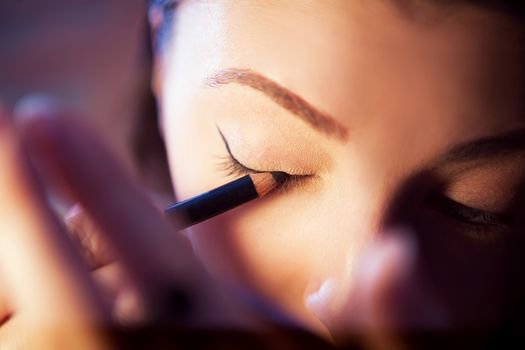
Tightlining (upper waterline) needs a pencil. Full stop. Liquid liners don’t belong on the waterline, and gel pots rarely feel practical there. You want a pencil that can lay colour between lashes without poking, and you want to work in tiny presses, not a long swipe.
Smoky liner also favours pencil because you need blend time. If you want that lived-in, diffused edge, you’ll fight a liquid liner that sets fast. Gel can work if you blend immediately, but pencil stays the easiest route.
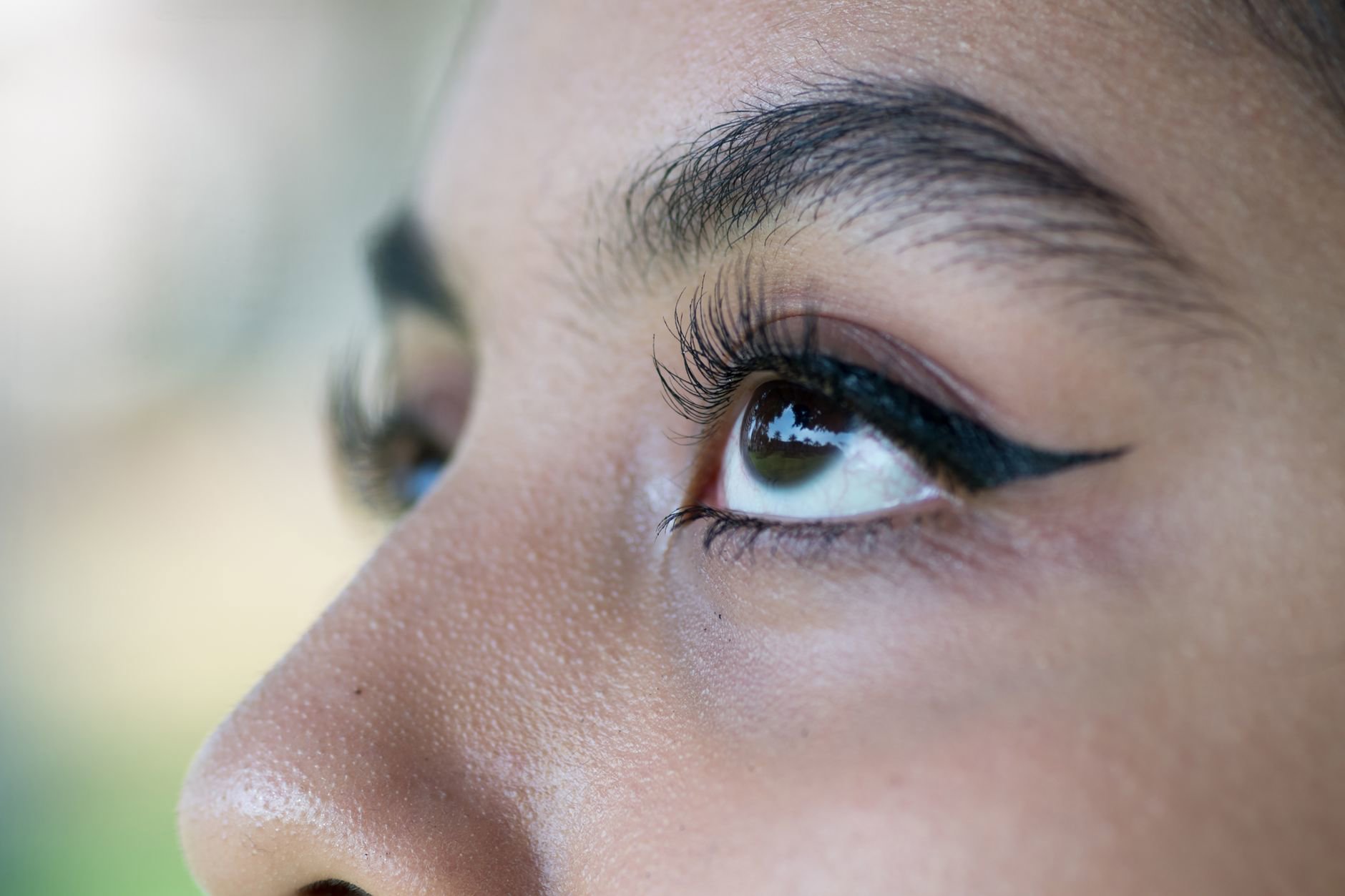
Winged liner tends to favour liquid for the crispest edge. But pencils can still do wings well if you accept a softer flick, or if you sketch the wing and keep it thin. A micro-tip pencil can help you map the shape before you deepen it.
Since this guide focuses on pencil liners, here are the pencil matches we see shoppers pick for each look—based on availability and pricing consistency across Canadian retailers like Sephora Canada and department stores.
Pencil liner matches by look
- For tightlining: Clinique Quickliner For Eyes (C$32.00) and Lancôme Le Crayon Khôl (C$34.00) both suit the “press between lashes” method.
- For smoky eyes: Charlotte Tilbury Pillow Talk Eyeliner (C$34.00) if you want softer definition, or Sephora Collection 12H Contour Pencil Eyeliner (C$18.00) if you want an affordable smudge-and-go.
- For a soft wing: Shiseido Microliner Ink (C$34.00) for mapping a thin flick, then building slowly.
- For a bolder, graphic edge in pencil form: MAC Colour Excess Gel Pencil Eye Liner (C$34.00).
How to choose when you have hooded eyes, watery eyes, or winter dryness
Choosing a format gets easier when you start with your constraint. Not your “dream look.” Your constraint.
Hooded lids: transfer happens when product touches skin. Liquid liners often stamp the crease before they dry. Pencils help because you can keep the line ultra-thin and work it into the lash line. A micro-style pencil also helps you avoid over-thickening, which can eat lid space.
Watery eyes: the inner and outer corners break down first. Pencils that run very creamy can migrate. A longer-wear pencil can help, but technique matters more: apply in short presses, then stop. Over-application invites breakdown.
Dry, tight winter lids: stiff formulas tug more. This is where pencil’s glide earns its keep. If your lid skin feels rough, prioritise a pencil that draws without skipping. Then keep your line close to the lashes, so texture doesn’t show.
Also watch your eye-area skincare. Rich eye creams and oily sunscreens (even excellent ones from the SPF Protection Products category) can creep upward and reduce liner wear. Give skincare time to settle before you line.
Practical pencil picks for common constraints
- For hooded lids that need thin placement: Shiseido Microliner Ink (C$34.00).
- For watery eyes that need a sturdier wear claim: Estée Lauder Double Wear 24H Waterproof Gel Eye Pencil (C$34.00).
- For winter dryness where tugging annoys you: start with Clinique Quickliner For Eyes (C$32.00) or Lancôme Le Crayon Khôl (C$34.00), then adjust based on feel.
- For budget troubleshooting: Sephora Collection 12H Contour Pencil Eyeliner (C$18.00) lets you test placement and shade without a big commitment.
Money and value in Canada: when to pay more for a pencil
Pencil liner pricing in Canada clusters into two bands in our feeds: around C$18 for entry options, and around C$32–C$34 for prestige. The premium often reflects brand positioning, but it can also reflect packaging, shade development, and how often a product sits at full price.
We’d pay more when a pencil solves a specific problem: ultra-fine placement, reduced transfer, or a shade you wear constantly. If you line daily, a pencil you love also reduces “drawer clutter” spending, which adds up fast.
We’d spend less when you want variety. If you like switching between brown, plum, and shimmer, a lower-priced pencil can make more sense. It’s also the smarter pick if you’re practising wings and expect some wipes and redraws.
Where to shop in Canada? Sephora Canada tends to stock the widest shade ranges for brands like MAC and Charlotte Tilbury. Department stores can vary. Drugstore availability depends on the brand. GlamGeek’s price tracking shows that pencils discount less predictably than categories like Mascaras, so it pays to compare before checkout.
At-a-glance: tracked pencil liners and prices
- Sephora Collection 12H Contour Pencil Eyeliner — C$18.00
- Clinique Quickliner For Eyes — C$32.00
- Charlotte Tilbury Pillow Talk Eyeliner — C$34.00
- Lancôme Le Crayon Khôl — C$34.00
- MAC Colour Excess Gel Pencil Eye Liner — C$34.00
- Shiseido Microliner Ink — C$34.00
- Estée Lauder Double Wear 24H Waterproof Gel Eye Pencil — C$34.00
Practical techniques you can use today (pencil-first)
If you only try one change, make it this: stop drawing one long line. Use short presses and strokes. You’ll get more symmetry and less skipping.
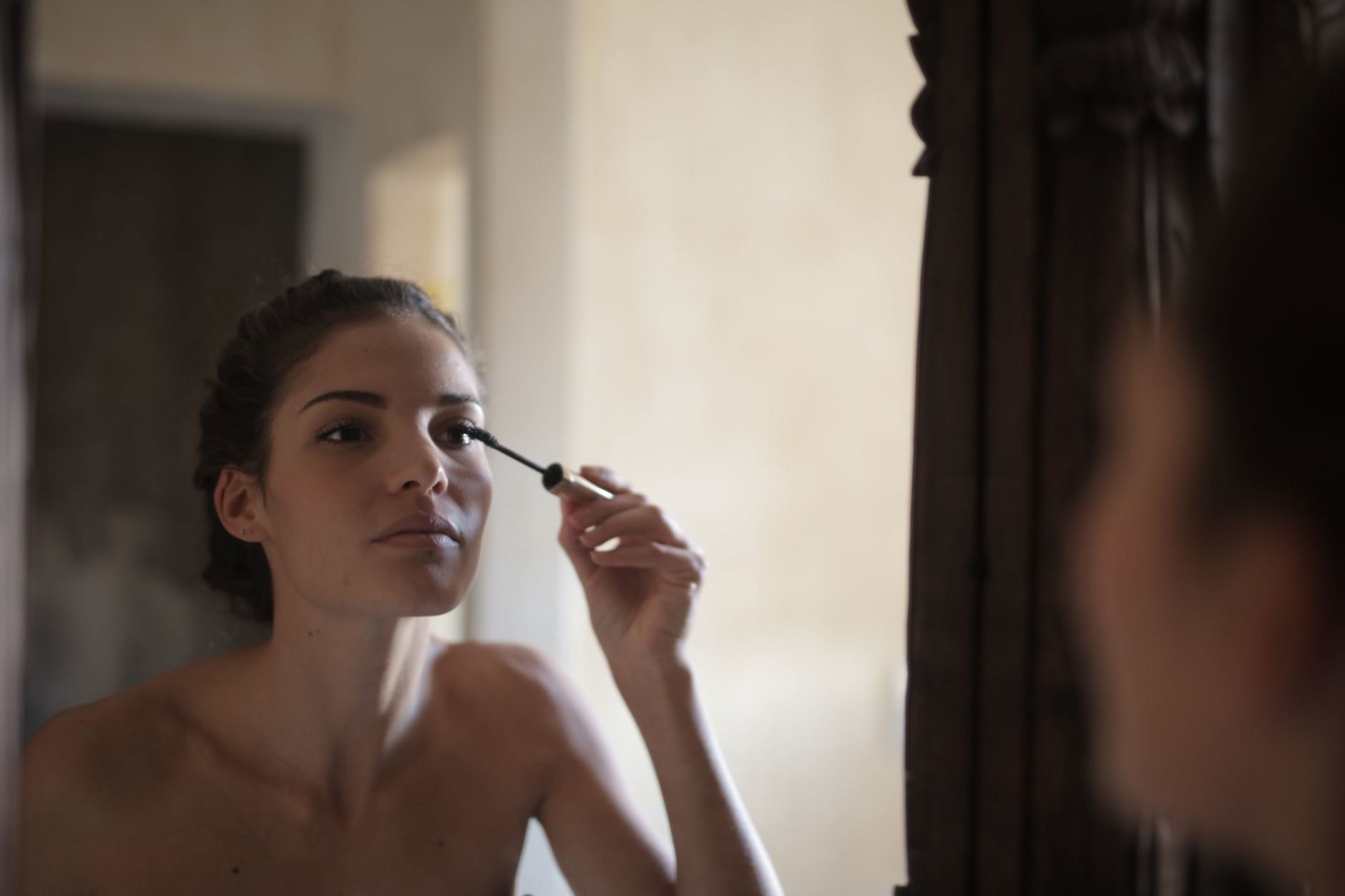
For tightlining with a pencil: look down into a mirror, lift the lid gently from the brow bone (don’t yank), then press the pencil into the lash roots in tiny taps. Focus on the outer half first. That section gives the biggest “lash boost” without making eyes look smaller.
For a clean everyday line: start at the outer third of the upper lash line. Sketch a thin line inward. Then go back and deepen only the outer corner. This keeps the line from creeping too thick near the inner corner.
For a soft wing with a pencil: mark one dot where you want the wing to end. Draw a short line back toward the lash line. Connect, then fill in with micro-strokes. If you want it sharper, use a tissue to pinch the outer edge and “clean” the line, instead of adding more product.
When you finish, pause for 20–30 seconds before you blink hard or apply other eye products from categories like Eye Shadow Palettes. Set time reduces transfer more than most people expect.
Which format do you reach for most—pencil, liquid, or gel—and what’s the one look you can’t get it to do reliably?