
To stop liquid eyeliner from smudging, you need two things: a lid surface that won’t break the film, and a liner formula that sets fast and stays flexible.
Most “smudging” isn’t your technique failing. It’s oil, water, heat, or friction dissolving or lifting the liner after it dries.
Below, we break down why liquid liner smears, what to do before you draw a wing, and which liquid liners tend to hold up better based on their wear claims and applicator design.
Why liquid eyeliner smudges (and how to ID your trigger)
Liquid liner smudges for a few repeatable reasons. The fastest way to fix it involves matching the fix to the cause, not piling on more product.
Oil sits at the top of the list. Your eyelids produce sebum, and that oil can creep into the liner film and soften it. If you notice smudging mainly on the outer corner or where your lid folds, oil plus skin movement usually causes it.
Water comes next. Watery eyes, allergies, contact lenses, and wind can add moisture at the lash line. Water can dilute some formulas before they set, or it can loosen the bond later. If you see liner “bleeding” downward or breaking up near the inner corner, moisture often drives it.
Heat and humidity speed everything up. In hot weather (or indoor heat), oil thins, sweat increases, and your liner film stays tacky longer. That makes transfer onto the crease more likely.
Friction finishes the job. Rubbing eyes, blinking hard, or lashes brushing a not-quite-dry line can create that telltale stamp above the wing.
What helps: choose a liner with explicit wear claims like “waterproof” or “longwear,” then build a routine that reduces oil and moisture on contact.
Prep that actually prevents smudging (no extra products required)
Good prep looks boring. That’s why it works.
Start with a clean, dry lid. If you apply skin care right up to the lash line, give it time to sink in. Cream residue acts like a lubricant under liquid liner.
Next, remove invisible oil. A quick sweep with a clean tissue or blotting paper over the lid can help. If you don’t have blotters, use a corner of a tissue and press—don’t rub. Rubbing can trigger watering.
Then keep your fingers off the lid. Skin oils transfer fast, and you can undo your prep in seconds while you “check symmetry.”
One more: if your lids run oily, avoid drawing liner over still-tacky base makeup. A tacky surface grabs pigment, but it can also keep the liner from forming a single, durable film.
We’ll say it plainly. If your liner smudges every time, your lid probably feels a little slick by midday.
Application technique that reduces transfer (step by step)
Smudge-proofing often comes down to how thick you apply liner and how long you let it set.
Step 1: map, then fill. Draw the thinnest possible line along the lash line first. Keep it close to the lashes so blinking doesn’t stamp it into the crease. Once that sets, you can build thickness where you want it.
Step 2: use short strokes. Long continuous swipes lay down more liquid at once. More liquid means a longer dry time, which means more chances to transfer. Short strokes also help you avoid “overworking” the same spot.
Step 3: keep the wing tail light. The outer corner moves a lot. A heavy, wet wing tail cracks and then smears. Sketch the wing with minimal pressure, then connect it.
Step 4: do not blink hard for 30–60 seconds. If you have hooded lids, look slightly down into a mirror while it dries. That keeps the lid more stretched, so the liner can set before it meets the fold.
Step 5: avoid a second coat until the first coat sets. Layering wet-on-wet can re-dissolve the first layer and create a gummy film that transfers.
When readers tell us “it smudges immediately,” we usually see one of two patterns: too much product in one pass, or blinking before the film sets.
Choosing a liquid liner that resists smudging (what to look for)
Marketing language gets loud in eyeliner. We prefer concrete cues: waterproof claims, longwear claims, and applicators that control the amount of product.
Waterproof and longwear claims usually signal film-formers designed to resist water and oil. For example, Stila Stay All Day Waterproof Liquid Eye Liner (from $19.32) centers its waterproof wear and a fine, pen-like tip for control. Control matters because thinner, even lines set faster and smear less.
If you want explicit long-wear language, Make Up For Ever Aqua Resist Graphic Ink (from $24.15) claims up to 24 hours of waterproof wear and uses a tapered tip for precision. In our price tracking, this sits in a higher tier than most drugstore options, so we’d treat it as a “pay for wear time” pick.
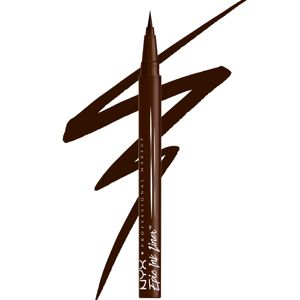
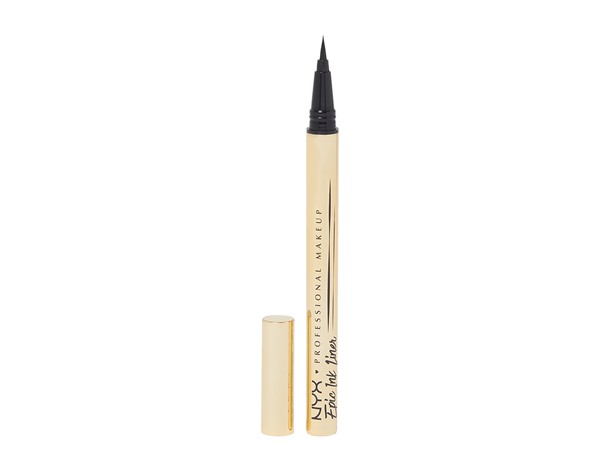
Felt-tip vs brush-tip also changes smudging risk. Felt tips often dispense product more consistently, which helps prevent puddling. NYX Epic Ink Liner, Waterproof Liquid Eyeliner Pen (from $9.19) uses a felt tip and calls out a waterproof formula designed to last without smudging or transferring.
On the budget end, look for precision brushes that help you apply less product. Revolution Super Flick Eyeliner (from $3.44) highlights an ultra-thin brush for sharp wings. Less product, less dry-time, fewer stamps.
One more angle: dual-ended designs can reduce over-layering. If you keep one end for thin mapping and the other for drama, you avoid repeated passes. Revolution Eyeliner Flick Thick & Thin (from $3.96) gives you a thin end and a thick end, both intensely black.
Smudge-proof picks from our tracker (by need and budget)
We only recommend within the liquid liner category here, and only from the products listed in our merchant feeds for this guide. Prices below reflect the “from” pricing we see across tracked retailers and marketplaces; your best deal depends on stock and promotions.
If you want a classic waterproof workhorse: Stila Stay All Day Waterproof Liquid Eye Liner (from $19.32). Stila emphasizes an ultra-precise, pen-like tip for control and a waterproof formula. This suits people who need clean lines between lashes and quick setting.
If you need maximum wear claims for long days: Make Up For Ever Aqua Resist Graphic Ink (from $24.15). The brand calls out up to 24 hours of waterproof wear and “non-stop ink flow technology.” That “consistent flow” detail matters because skipping leads to repeated strokes, which leads to smears.
If you want waterproof at a lower price point: NYX Epic Ink Liner, Waterproof Liquid Eyeliner Pen (from $9.19). The description focuses on a super sharp felt tip and wear that lasts without smudging or transferring. NYX also tends to show up widely at mass retailers, which can make replacement less painful.
If your main issue is shaky wings, not formula: Revolution Super Flick Eyeliner (from $3.44). The ultra-thin brush helps you keep the first layer thin. Thin layers dry faster, and fast-dry reduces transfer.
If you like options in one pen: Stila Stay All Day Dual-Ended Waterproof Liquid Eye Liner (from $23.00) gives you the original waterproof liquid liner on one side and an ultra-thin applicator on the other. That setup fits the “map then build” method.
If you want dual shades and finishes: Stila Stay All Day Dual-Ended Liquid Eye Liner (from $19.32) offers two shades, two finishes, and two tips. For smudging, the practical win involves less layering and more precision.
If you want creative color (and can manage water-activation): Glisten Cosmetics Wet Liner® (from $4.65) and Glisten Cosmetics Split Liner (from $7.25) use water-activated formulas. These open up graphic looks and ombré effects. They also require smart drying time, because moisture drives movement.
We’d skip guessing about “the best for everyone.” Your lid type and your environment matter, and so does your patience during dry-down.
Setting and touch-up strategy (without turning liner into a mess)
Setting liquid liner sounds simple until you do it wrong. Then you get patchiness, cracking, or a gummy line that transfers worse.
First rule: let the liner fully dry. If you touch it too soon, you lift pigment and create a textured edge. That texture catches moisture and breaks down faster.
Second rule: fix breaks, don’t repaint the whole wing. If you see a tiny gap, use the tip to tap product only where needed. Over-layering the entire line often creates a thick film that never quite sets.
If your eyes water during application, pause and let the moisture stop. Then gently blot the inner corner with a tissue edge. Apply liner after the area feels dry again.
For people who always get transfer at the crease: keep the top edge of the line as thin as possible. Thickness at the top edge increases the chance of contact when your lid folds.
Two more practical habits help a lot:
- Do liner before mascara when possible, so lashes don’t brush wet liner.
- Store pens tip-down if the format allows, so the ink flow stays consistent and you don’t press harder than necessary.
- Replace liners that skip. Skipping makes you retrace, and retracing drives smudges.
- Keep a clean cotton swab on hand to sharpen edges while the liner is still slightly damp.
Ingredient and formula science (in plain English)
Liquid liner stays put when it forms a thin, continuous film that resists oil and water. Brands rarely list “this is our film former” on the front, but the behavior tells you a lot.
Waterproof liners usually rely on polymers that create a more water-resistant film. That doesn’t mean they resist everything. Oils can still soften some films over time, especially on oily lids.
Fast-setting formulas reduce transfer because they spend less time in the tacky stage. Tackiness creates stamps. It also attracts moisture at the lash line.
Flexible films crack less when your lid moves. Cracking often looks like smudging because pigment breaks and migrates. If your wing looks fine, then suddenly looks “dusty” at the edge, the film likely cracked and shed.
Applicator design connects to formula science. A tapered or ultra-fine tip helps you lay down less liquid at once, which speeds evaporation and film formation. That’s why products like Stila Stay All Day Waterproof Liquid Eye Liner (from $19.32) and Make Up For Ever Aqua Resist Graphic Ink (from $24.15) lean hard on tip precision in their descriptions.
Water-activated liners flip the script. Glisten Cosmetics Wet Liner® (from $4.65) and Glisten Cosmetics Split Liner (from $7.25) require water to activate, which makes them highly customizable for graphic looks. For smudging, the tradeoff involves exposure to moisture after application. If your eyes water often, you’ll need extra patience during dry time and a lighter hand.
One caution: don’t assume higher price always means less smudging. Our price tracking since 2010 shows plenty of variance by retailer and promo cadence. Formula behavior still matters more than MSRP.
Practical fixes you can try today (quick checklist)
If you want a no-drama routine, follow this sequence for a week and see what changes. Consistency helps you isolate the real cause.
Daily method:
- Blot lids with tissue before any eye makeup.
- Draw a thin lash-line first, using short strokes.
- Wait 30–60 seconds with eyes relaxed (no hard blinking).
- Add the wing tail with minimal pressure, then connect.
- Stop layering once it looks opaque and clean.
Match the liner to your problem:
- If you get transfer and watery eyes: prioritize waterproof claims like NYX Epic Ink Liner (from $9.19) or Stila Stay All Day Waterproof (from $19.32).
- If you need extreme wear time: consider Make Up For Ever Aqua Resist Graphic Ink (from $24.15).
- If your issue is messy application: choose precision tools like Revolution Super Flick Eyeliner (from $3.44) or a dual-ended format like Revolution Flick Thick & Thin (from $3.96).
- If you want artistic color and can control moisture: try Glisten Cosmetics Wet Liner® (from $4.65) or Glisten Cosmetics Split Liner (from $7.25).
Shopping tip: check price swings across major retailers. Our feeds often show that the same liner can vary depending on whether you buy during a Sephora-style event, an Ulta-style promo, or a marketplace discount. For brand browsing, you can also see the broader catalog pages for Revolution, NYX, and Clinique without leaving the eyeliner category.
If you want more context within makeup, we’d keep it simple: solve liner smudging first, then build the rest of the eye look around it.
Which kind of smudge do you get most—crease transfer, under-eye smearing, or inner-corner breakdown? If you tell us that (and your climate), we can point you to the most sensible liquid liner format from the list above.